
 Alex
AlexRotary drilling rigs represent the backbone of modern oil and gas exploration, employing sophisticated mechanical systems to penetrate deep into the earth's crust. These complex machines combine brute force with precision engineering to create wellbores that can extend miles beneath the surface. While the fundamental concept of rotating a drill bit remains unchanged since the early 20th century, today's rigs incorporate advanced technologies that maximize efficiency and safety throughout the drilling process.
The Rotary Drilling Mechanism
At the heart of every rotary rig lies the rotating system that turns the drill bit. Traditional rigs use a rotary table – a circular steel plate with a square opening that engages with the kelly (a special square or hexagonal pipe) to impart rotation. As the table turns, it spins the entire drill string connected below. Modern rigs increasingly employ top drive systems that mount the rotary mechanism directly on the traveling block, allowing continuous rotation while tripping pipe.
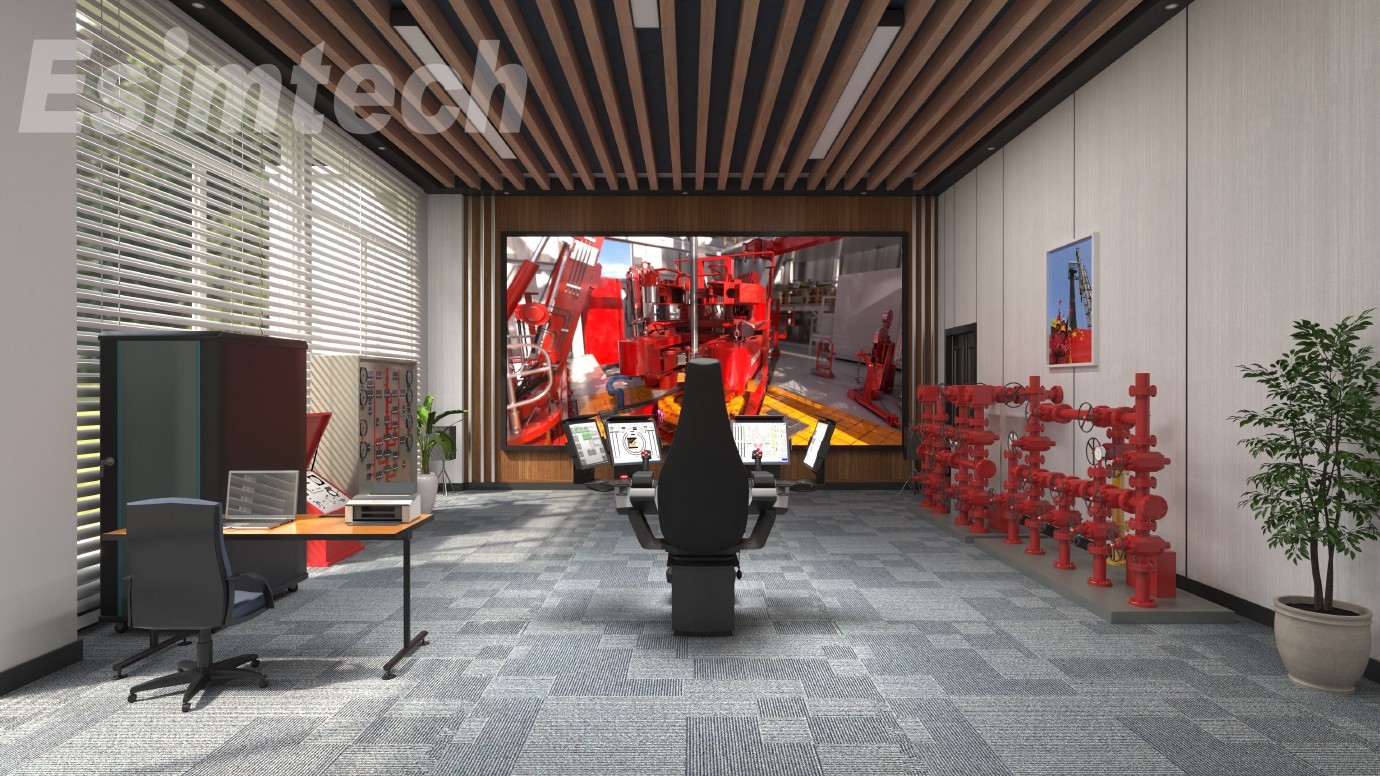
The drill string's weight provides the necessary weight on bit (WOB) to make the cutters engage the formation. This force is carefully controlled through the hoisting system, with typical WOB ranging from 5,000 to 50,000 pounds depending on formation hardness. Some applications supplement surface rotation with On Land Drilling Simulators that help optimize these parameters for specific geological conditions.
Hoisting System and Load Management
The drawwork serves as the rig's powerhouse, containing a massive winch drum that spools the drilling line. This line runs through the crown block (stationary pulleys at the derrick top) and traveling block (moveable pulleys), creating a mechanical advantage that can handle hundreds of tons of drill string. A typical 10-line system provides 10:1 mechanical advantage, allowing the drawwork to hoist enormous loads with relatively modest power input.
Modern vs Traditional Hoisting: While conventional drawworks use mechanical brakes, modern versions incorporate dynamic braking systems that convert descending load energy into electrical power. This innovation reduces wear and improves control during fast line movements, particularly important in deepwell applications.
Precise weight control is critical – too little WOB slows drilling progress, while excessive weight can damage the bit or cause deflection. The driller monitors weight indicators constantly, adjusting brake pressure to maintain optimal parameters. Training on On Land Drilling Simulators helps develop this delicate touch before operators work with actual equipment.
Circulation System and Drilling Fluid
The mud circulation system performs multiple vital functions simultaneously. High-pressure mud pumps (typically duplex or triplex designs) force fluid down the drill string at rates up to 1,000 gallons per minute. The fluid exits through nozzles in the bit, cooling the cutters and flushing cuttings into the annulus (space between pipe and hole wall) for removal.
| Mud Component | Primary Function | Typical Concentration |
|---|---|---|
| Bentonite Clay | Viscosity and gel strength | 20-30 lb/bbl |
| Barite | Density control | 50-400 lb/bbl |
| Polymers | Filtration control | 0.5-2 lb/bbl |
| Lubricants | Friction reduction | 1-5% by volume |
Returning fluid passes through shale shakers (vibrating screens) that remove larger cuttings, followed by desanders, desilters, and centrifuges that progressively fine-tune the fluid's solid content. Chemical additives maintain optimal viscosity, density, and other properties critical for well control and formation stability. The mud also serves as the primary well control barrier, with its hydrostatic pressure preventing formation fluids from entering the wellbore.
Drill String and Downhole Tools
The drill string consists of interconnected steel pipes that transmit rotation and fluid to the bit while providing the necessary weight. Standard drill pipe (typically 30-45 feet long) forms most of the string, with thicker-walled drill collars added near the bottom to increase WOB. Specialized downhole tools like stabilizers (for directional control), reamers (for hole enlargement), and measurement-while-drilling (MWD) instruments may be incorporated into the bottom hole assembly (BHA).
Modern Drill Bit Technology: Today's polycrystalline diamond compact (PDC) bits feature hundreds of synthetic diamond cutters arranged in optimized patterns for specific formations. Some advanced designs incorporate sensors that provide real-time data on vibration, temperature, and wear patterns, allowing driller's to adjust parameters before damage occurs.
Directional drilling applications often include mud motors – progressive cavity pumps that convert mud flow into rotary motion. These allow precise steering without rotating the entire string from surface. Combined with MWD systems that relay toolface orientation, modern rigs can drill complex 3D well paths with accuracy under one degree of deviation.
Safety and Well Control Systems
Rotary rigs incorporate multiple layers of protection against uncontrolled flow (blowouts). The primary barrier is always the mud column's hydrostatic pressure, maintained through careful density control. Secondary barriers include the blowout preventer (BOP) stack – massive valves that can seal the well annularly or around specific pipe sizes.
BOP Components: A typical stack includes annular preventers (rubber elements that seal on any shape), pipe rams (for specific pipe diameters), blind rams (for open hole), and shear rams capable of cutting through drill pipe in emergencies. These are tested weekly under simulated well conditions to ensure reliability.
Continuous monitoring systems track return flow rates, pit volumes, and gas content – any discrepancy could indicate a kick (uncontrolled formation fluid entry). Crews undergo regular well control certification using On Land Drilling Simulators that recreate high-pressure scenarios without actual risk. This combination of equipment and training has dramatically reduced blowout incidents industry-wide.
